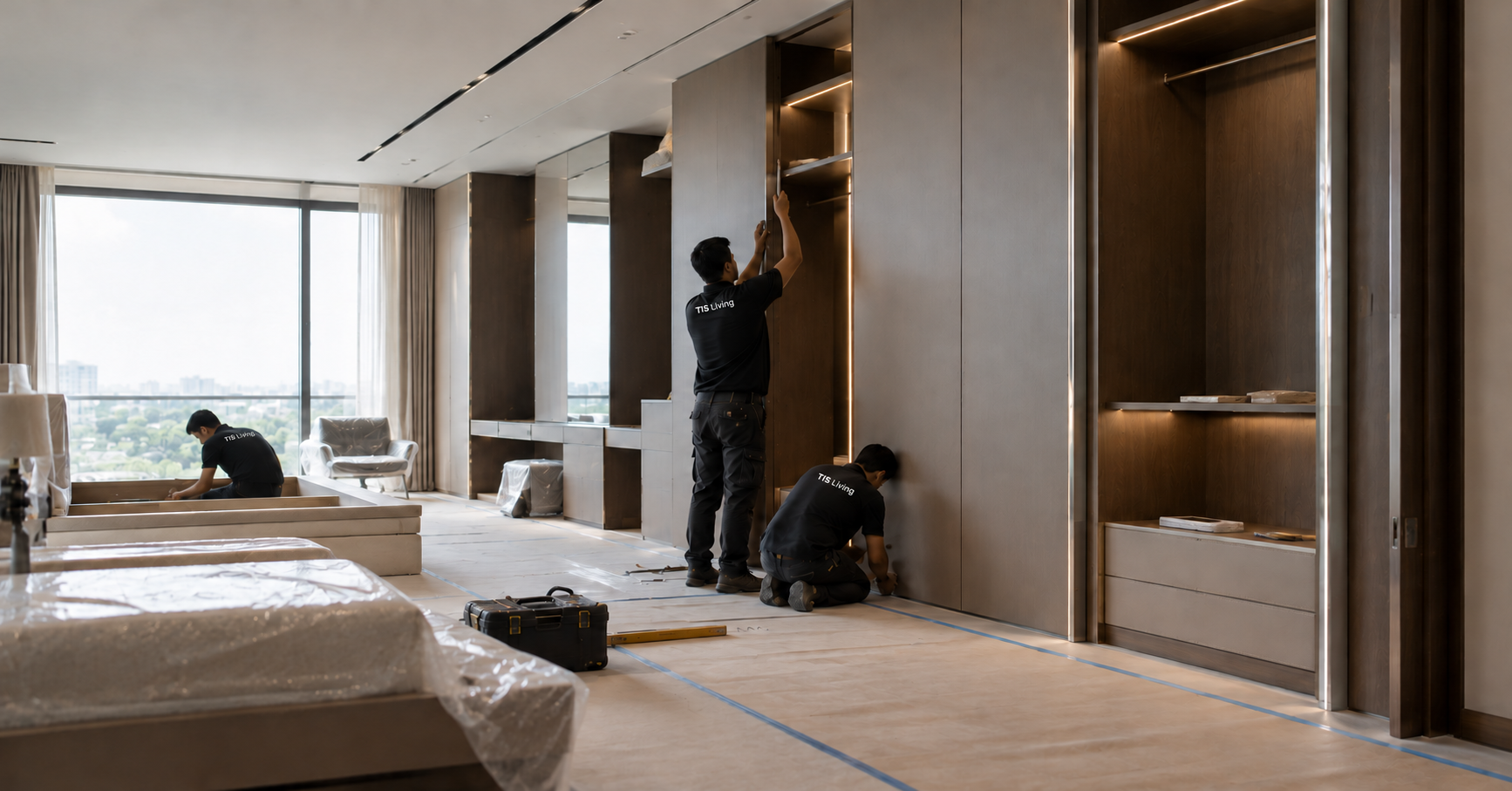
The truck is loaded. The crew is booked. Then someone mentions the marble in the master bedroom was laid four days ago and is still curing.
Everything stops. The crew goes back. The next available slot is eleven days away, and by then the client has started asking why a project that was on schedule is suddenly not.
Almost none of this is a manufacturing problem. Most installation delays are decided weeks earlier, on site, by work that was not closed in the right order.
The short version
Before furniture arrives, five things must be complete: flooring laid and cured, walls painted and dry, electrical and plumbing points closed and positioned to drawing, false ceiling finished, and building access confirmed in writing. In Indian homes, add society permissions and monsoon timing. Confirm every item in writing 72 hours before dispatch.
"Most installation delays are decided weeks earlier, on site, by work that was not closed in the right order."
Six weeks before: civil work
Flooring laid and cured. This is the one that derails projects. Stone and marble need curing time before heavy units sit on them, and polishing after installation means covering finished furniture. Lay first, polish, then install.
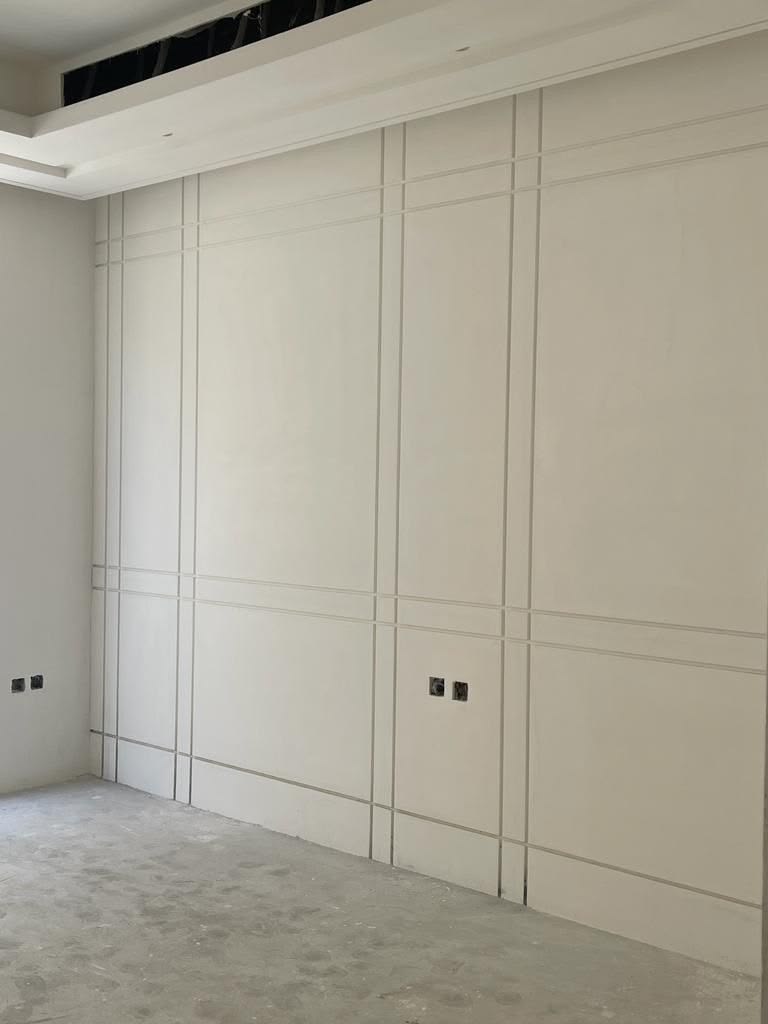
Walls plastered and true. Fixed woodwork is built to a measurement. A wall that gains 12mm of plaster after measurement is a wall the wardrobe no longer fits.
Plumbing closed. Anything running behind a vanity or inside a wardrobe wall is unreachable afterwards without cutting the unit out.
Waterproofing complete and tested. In bathrooms and anywhere sharing a wall with one. A leak discovered later moves through a carcass before anyone sees it.
Four weeks before: services and finishes
Electrical points final and positioned to drawing. Switch and socket positions behind panelling, inside wardrobes, above vanities. These are cut into the woodwork at the factory. Moving a point after manufacturing means a new panel.
Data, network and automation cabling pulled. Anything that runs behind a panel runs before the panel.
False ceiling finished and painted. Ceiling work above a wardrobe run cannot be done once the wardrobe is in. The order is fixed.
Walls painted, final coat, fully dry. Painting around installed furniture produces an edge you will see for years. Paint first.
Final measurements re-confirmed on site. After plaster, after flooring, after ceiling. Not from drawings.
Two weeks before: access and permissions
This is the stage nobody plans for, and in an Indian high-rise it is the one most likely to cost a day.
Society or RWA permission in writing. Many buildings require written notice for interior work, and some charge a refundable deposit.
Permitted working hours confirmed. Buildings commonly restrict work to specific hours and prohibit it on Sundays and public holidays. A crew that can only work six hours a day needs a longer booking.
Service lift booked, with its internal dimensions. A three-metre wardrobe shutter either fits the lift or goes up the stairwell. That decision is made at the factory, not at the gate.
Stairwell and corridor turns measured. Including the tightest turn, not the widest.
Parking and unloading point agreed. A container that cannot stop near the entrance becomes a manual carry.
Labour entry passes arranged. Many societies need names and identity documents in advance.
Lift and common-area protection agreed. Who protects, who inspects, who signs off.
72 hours before: written confirmation
Every item above, confirmed yes or no, in writing, before anything is dispatched. Not a phone call.
A fifteen-minute site check the week before prevents most of what goes wrong on the day. The written confirmation exists so that when something is not ready, it is known while the furniture is still in the factory rather than on a truck.
On the day
Floors protected before the first item enters.
Rooms empty. Not mostly empty. A crew working around stored boxes works slower and damages more.
Power available at site, with working lighting.
Water and a usable washroom for the crew.
One decision-maker reachable. Site questions arise. Waiting for an answer is the second most common cause of lost hours.
Secure storage if installation runs across days.


The Indian conditions nobody writes down
Monsoon
High humidity during installation affects adhesives, finishes and solid timber. Wood moves with ambient moisture. Installing fixed woodwork into a house that is still damp from civil work is how a flush shutter stops being flush by March. If the civil work ran late into the monsoon, letting the structure dry is not a delay, it is part of the work.
Festival season
Labour availability drops sharply around Diwali, and in many regions for weeks afterwards. Material transport slows too. An installation booked for the first week of November is competing with the entire construction industry for the same crews and the same trucks.
Stone and marble
Common in Indian homes and slower to be ready than tile. Laying, curing and polishing each take their own time, and polishing generates slurry that must not reach finished woodwork.
What a delay actually costs
A crew returning for a second visit is not just a rescheduled day. Transport repeats. The slot moves to the next opening, which is usually a week or more. Units already delivered need secure storage, and a wardrobe carcass stored in an unfinished house collects dust and moisture.
For projects outside Delhi NCR the arithmetic is worse. Manufacturing in Gurugram and installing in Guwahati means a return visit is a 2,000km round trip, which is why projects at distance carry an additional site-verification stage before anything is dispatched.
For architects and designers
Most of this list is work your client or their contractor controls, not you. Sending it at the start of the furniture stage, rather than two weeks before installation, moves the conversation from chasing to sequencing.
The items that cause the most trouble, in order: electrical point positions finalised after manufacturing has started, flooring laid late, and society permissions assumed rather than confirmed.
Common questions
What must be completed before custom furniture is installed?
Flooring laid and cured, walls plastered and painted with the final coat dry, electrical and plumbing points closed and positioned to drawing, false ceiling finished, and building access confirmed. In apartments, add society permission, permitted working hours and a booked service lift.
Can furniture be installed before flooring is done?
No. Flooring must be laid and cured first. Stone and marble also need polishing before installation, because polishing slurry and dust reach finished woodwork. Installing first means covering furniture during floor work, which risks both the finish and the schedule.
How far in advance should site readiness be confirmed?
Civil work six weeks ahead, services and finishes four weeks ahead, access and society permissions two weeks ahead. Every item confirmed in writing 72 hours before dispatch, so that anything unready is known while the furniture is still at the factory.
Why do electrical points matter for custom woodwork?
Switch and socket positions behind panelling, inside wardrobes and above vanities are cut into the woodwork during manufacturing. Moving a point after manufacturing has started usually means remaking the panel, not adjusting it on site.
Does the monsoon affect furniture installation?
Yes. High humidity affects adhesives, finishes and solid timber, and wood moves with ambient moisture. Installing into a house still damp from civil work causes shutters and joints to move once the structure dries. Allowing the building to dry is part of the work, not a delay.
Share this story
Share

Written by
TIS Living
Stories, insights and design perspectives from the TIS Living editorial team.
Stay in the loop
More stories like this one
Design guides, material stories and project features — delivered when we have something worth saying.