She wants more storage. He wants the bedroom to feel open. The conversation has happened four times and ended the same way each time, which is to say it has not ended.
Eventually someone calls the vendor. Whoever happens to be home when he arrives describes what they want. He measures, nods, and builds that.
Six months later the wardrobe is full and the room feels heavy, or the room feels right and the winter quilts are still in the guest bedroom. One person got their way. Nobody decided anything.
Both of you are right, which is the problem
This argument does not resolve on its own because it is not really about the wardrobe.
Storage anxiety is about control. A house where things do not have a place is a house that feels permanently unfinished, and that lands on whoever runs the home. Usually, still, the woman.
Space anxiety is about rest. A bedroom crowded floor-to-ceiling on three walls reads as a storeroom you sleep in. That lands on whoever most needs the room to be calm at the end of the day.
Neither of those is a preference. They are both true.
"A vendor who takes the brief from one of you is building half a bedroom."
What nobody measures before deciding
The argument is almost always conducted in the abstract. More storage, less storage. Nobody counts.
Fifteen minutes with the actual contents settles more than six weeks of discussion.
What hangs, and how long. Sarees mostly do not hang. Suits and sherwanis need full height and cannot be folded. A couple where one person's wardrobe is 70% hanging and the other's is 70% folded needs two different internal layouts, not one wardrobe split down the middle.
What is seasonal. Razais, quilts, winter coats, trunks. These need a loft, not shelf space at eye level. Loft storage is cheap, nobody fights over it, and it removes a quarter of the volume from the argument immediately.
What is daily. The things you reach for before 8am. This is the smallest category and the one that actually determines whether the wardrobe is pleasant to use.
What is occasion. Wedding clothes, jewellery, the good shoes. Used four times a year, stored for 361 days.
Most couples discover their real disagreement is about one category, not about storage in general. That is a solvable conversation.
Four ways out
Split vertical, not horizontal
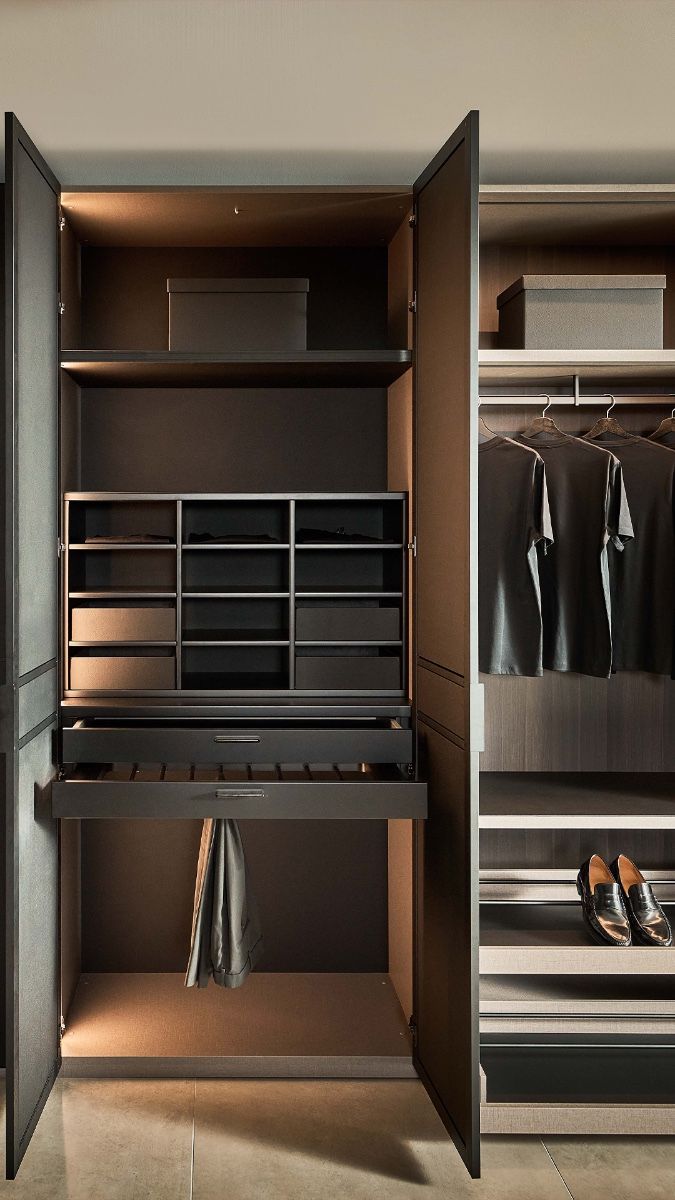
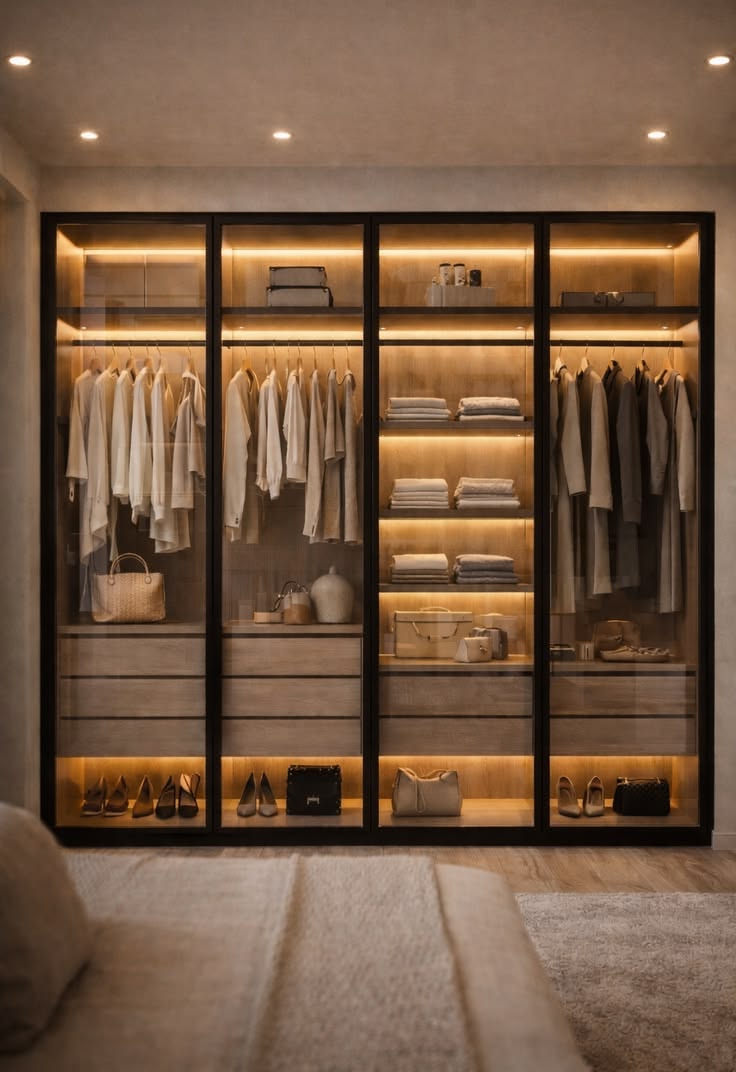
Two tall units with different internals beat one wide unit with a shared rail. Each person's habits get their own geometry. Nobody negotiates shelf heights.
Move seasonal storage out of the bedroom
Lofts, a corridor unit, the space above the guest bed. Winter quilts do not need to live where you sleep.
Take the wardrobe off the wall you see first
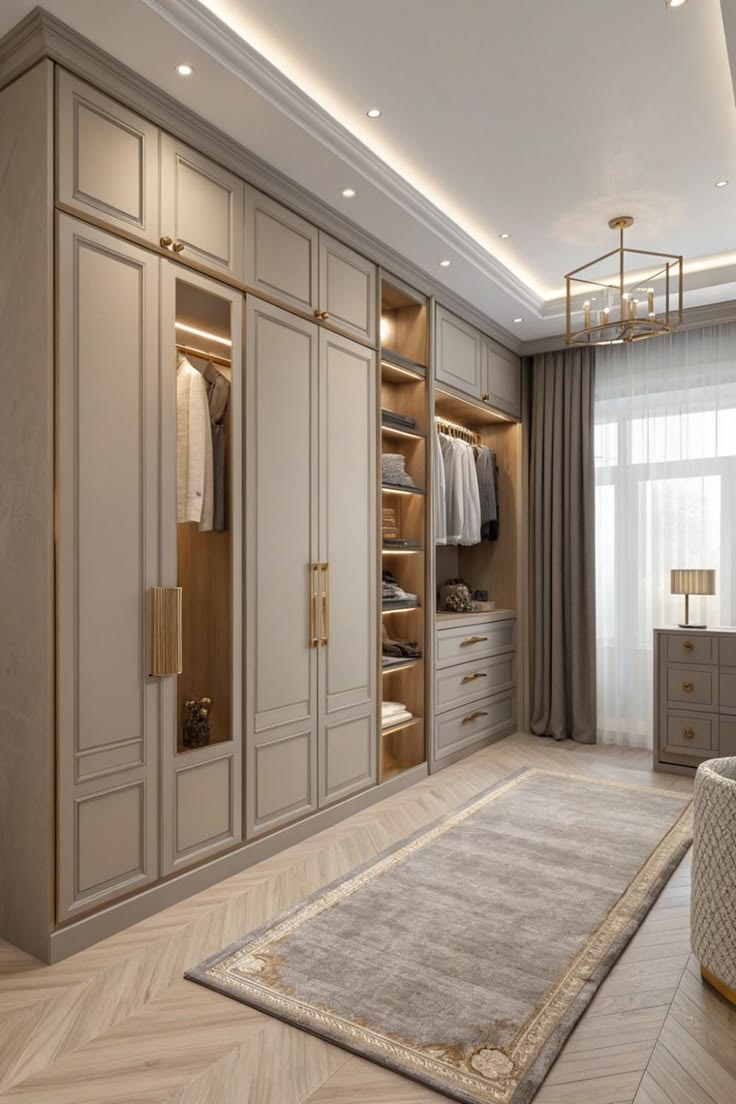
The wall opposite the bed is the one your eye lands on every morning. Put storage on the wall behind the headboard or beside the door, and the room reads open even when it is not.
Build it into the architecture
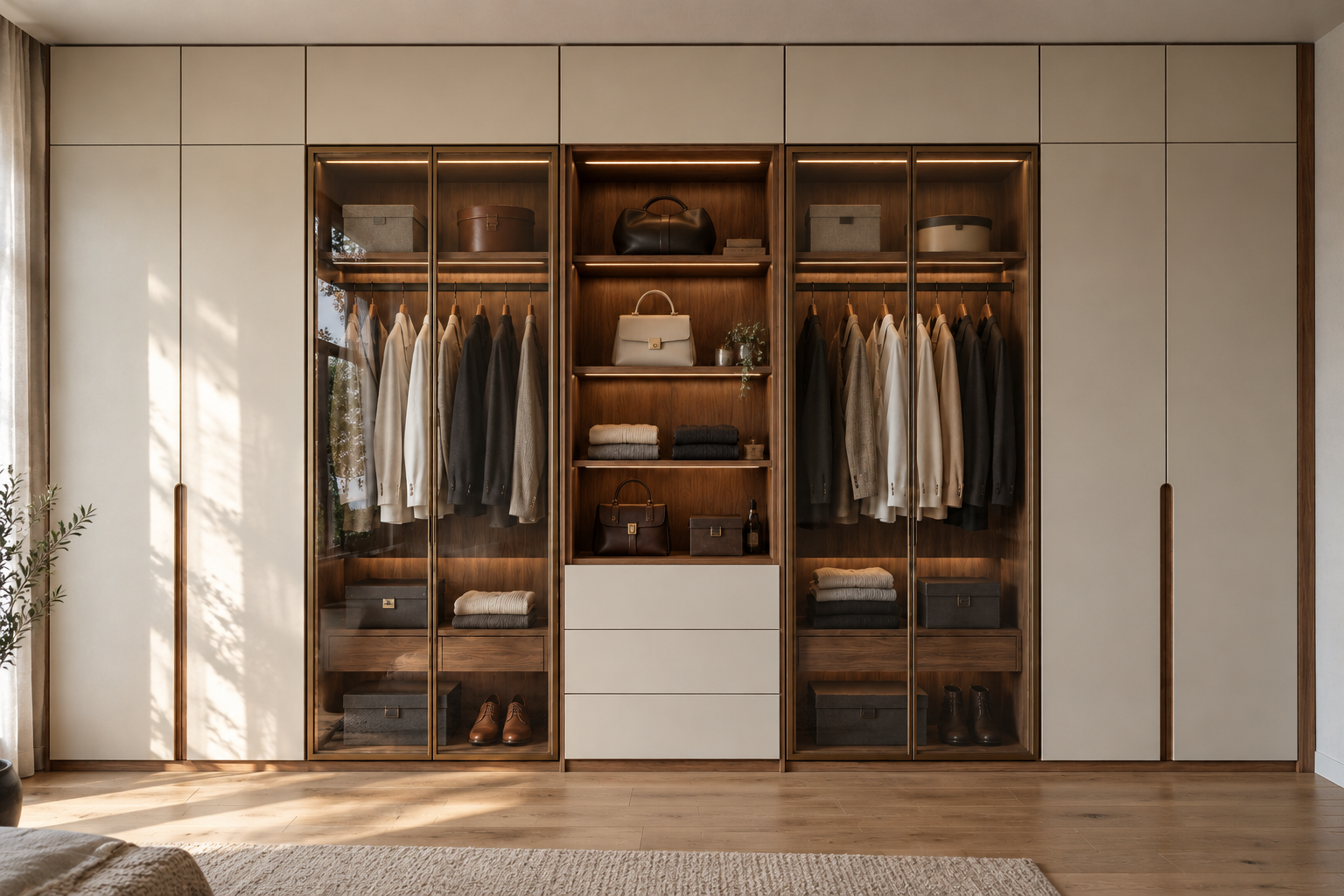
A wardrobe flush with the wall, same finish as the panelling, no handles, no visible edge, stops reading as furniture. The storage is identical. The room is calmer. This is the version that costs more and resolves the argument completely.
Why we ask before we draw
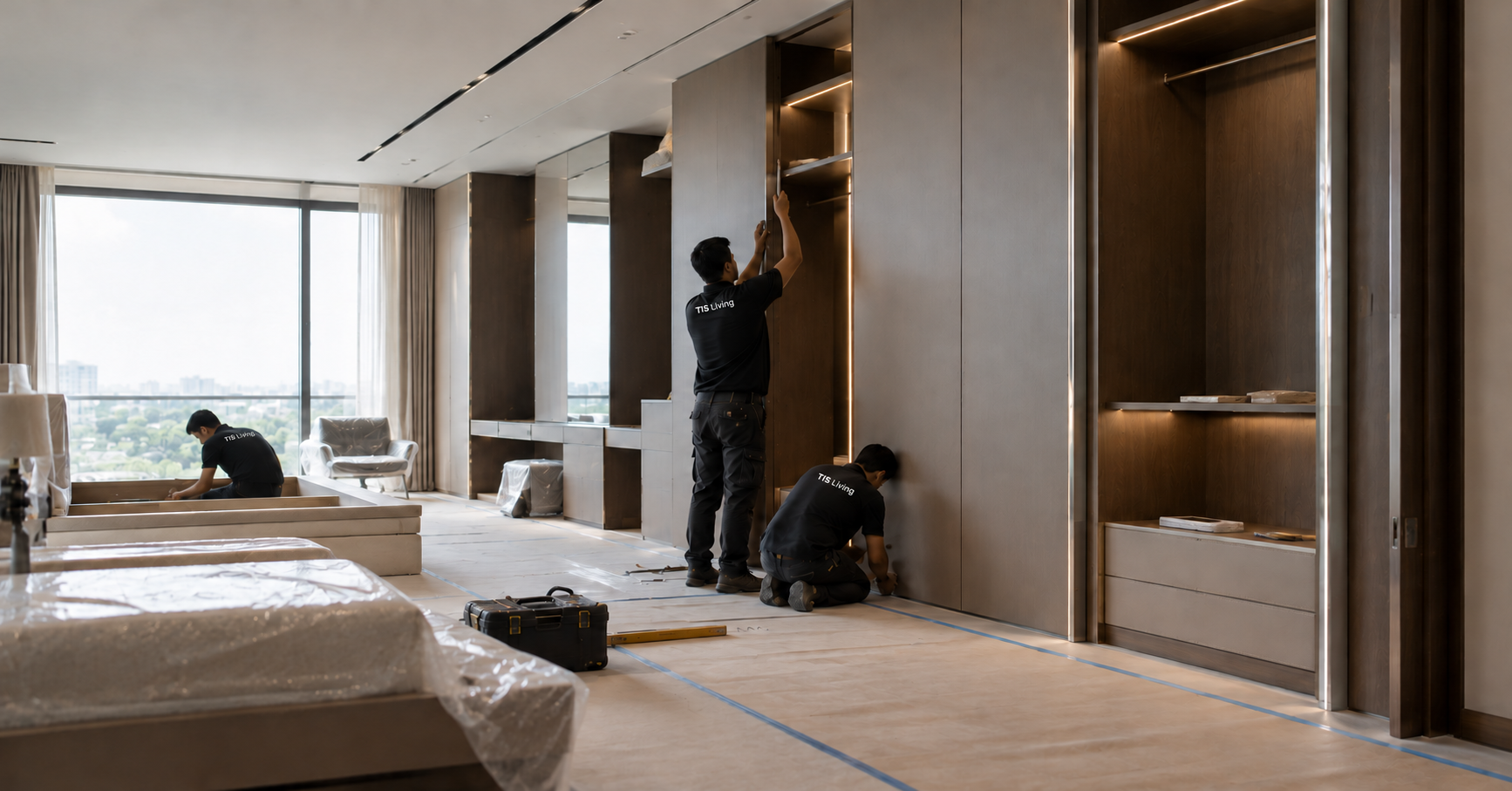
At TIS Living, requirement alignment is a stage of the process, not a courtesy. Before any drawing is made, we sit with everyone who will use the space.
It is the slowest part of the project and the one clients are most impatient with. It exists because of this exact argument.
Changing a drawing takes an afternoon. Changing a wardrobe takes eight weeks.
Common questions
How much wardrobe storage does a couple actually need?
Count rather than estimate. Separate what hangs from what folds, and daily use from seasonal. Most couples find seasonal items — quilts, winter clothing, trunks — account for a quarter of the volume they are arguing about, and those belong in loft storage rather than in the bedroom.
Should a couple share one wardrobe or have two?
Two vertical units with different internals usually work better than one wide shared unit. Sarees need folded shelf space, suits need full-height hanging, and splitting a single rail between two different habits satisfies neither person.
How do you add storage without making a bedroom feel smaller?
Keep storage off the wall you face from the bed. Build wardrobes flush with the wall in the same finish as the surrounding surface, without visible handles or edges. Move seasonal items to loft storage. The volume stays the same and the room reads open.
When should storage be decided in a custom furniture project?
Before the design drawing, not after. Changing a drawing takes an afternoon. Changing a built wardrobe takes eight weeks.
Share this story
Share
Written by
TIS Living
Stories, insights and design perspectives from the TIS Living editorial team.
Stay in the loop
More stories like this one
Design guides, material stories and project features — delivered when we have something worth saying.