What to Ask a Furniture Maker Before You Sign Anything
Most furniture disputes don't start at delivery. They start at the first meeting, when a question that should have been asked never was. Here are the ones that actually matter, and what a good answer sounds like versus a warning sign.
1. Can you show me the process before production starts?
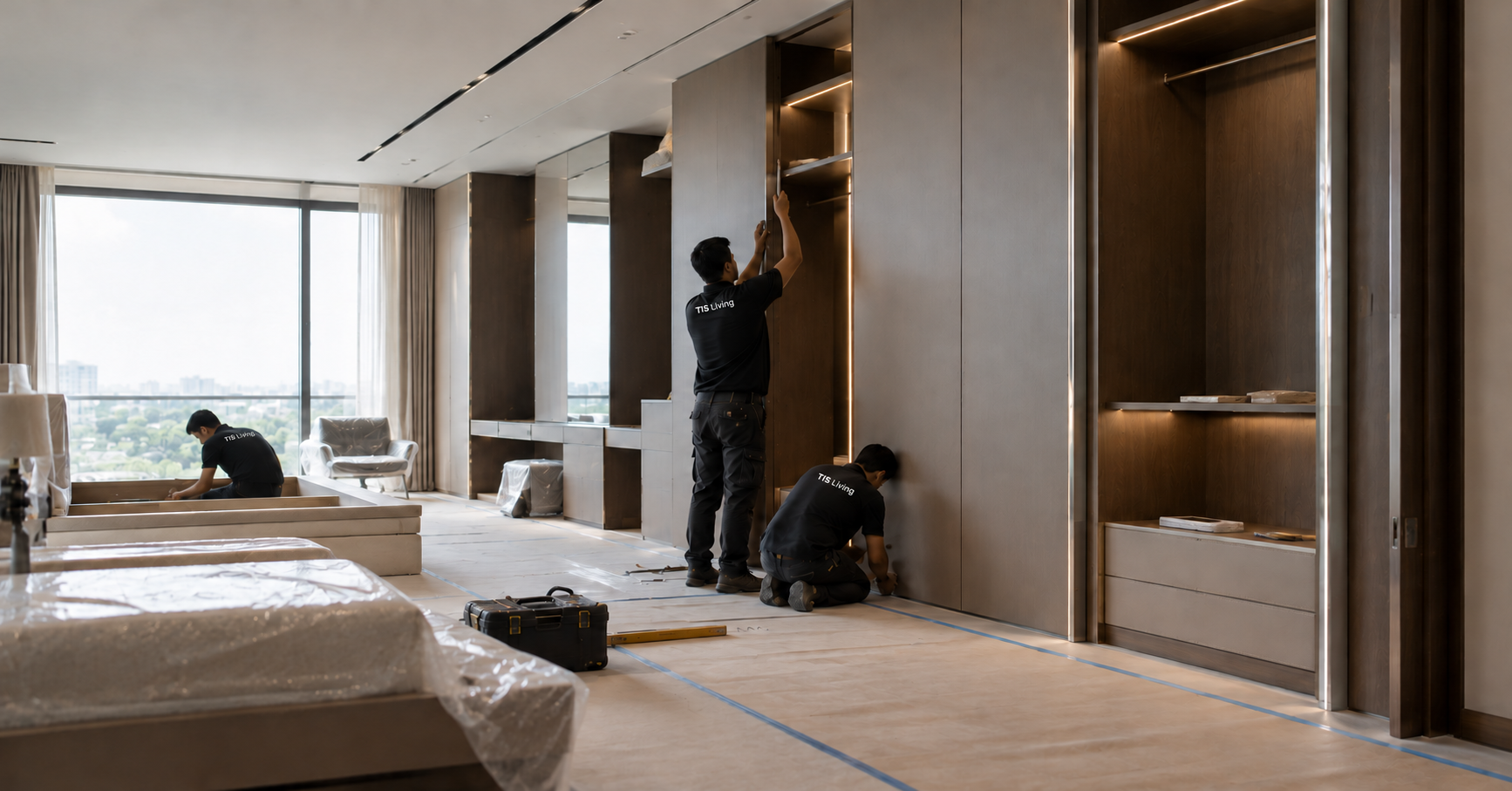
Any maker worth hiring should have a clear sequence of steps that happens before a single piece of wood is cut — understanding how the space is actually used, a detailed requirements checklist, site measurement and validation, shop drawings, and sign-off before production. If the answer is some version of "we just get started once you approve the design," that's the single biggest predictor of mid-project surprises. Most furniture problems trace back to a step that got skipped here, not to bad craftsmanship later.
2. What happens if the site measurements don't match the drawing?
Real homes are never perfectly true. Walls are off by a few millimetres, electrical points land in the wrong spot, ceiling heights vary room to room. A maker who validates site conditions before production — not after delivery — catches this early. One who doesn't will either force-fit the piece on install day or come back with a change order.
3. Is this fully finished in a factory, or will there be carpentry work at my home?
This changes everything about finish quality, dust, timeline, and price. Factory-finished pieces are made under controlled conditions with proper machinery and are simply installed on-site. On-site carpentry means sawdust in a lived-in home, inconsistent finish quality, and a much longer install window.
4. What exact material and hardware am I getting, in writing?
"Premium ply" and "branded hardware" mean nothing without a specific grade and brand name written down. Ask for the exact ply grade (BWP, commercial, MR), the veneer or laminate brand, and the hinge/channel brand. This is the detail that determines how the piece holds up in five years, not just how it looks on delivery day.
5. What's your process if I want to change something mid-project?
Changes happen. What separates a good vendor is having a defined way to handle them — a clear cost and timeline impact communicated before the change is made, not after. If a maker gets defensive or vague about changes, that's usually a sign they don't have a system for handling them.
6. Can I see your factory or a live project?
A maker confident in their process usually welcomes this. One who avoids it, or only shows renders and photographs, is worth a second look. Seeing craftsmen, machinery, and material stock in person tells you more in ten minutes than a portfolio does in an hour.
7. What's your closure rate after quoting, and why do deals fall through?
This is an unusual question to ask, but a maker who can answer it honestly — and explain why some deals don't close (usually price comparison against unrelated categories, or clients wanting a different scope) — is one who understands their own business. A maker who's never thought about this probably hasn't reflected much on client experience either.
8. Who actually shows up during installation, and who do I call if something's wrong after?
Installation and after-sales support often get handled by a different team than the one that sold the project. Know who that is before the contract is signed, not after there's a problem.
The One Question That Reveals Everything
Ask any furniture maker to describe their worst project — a case where something went wrong — and how they resolved it. A maker who can answer specifically, without deflecting to "we've never had issues," is one who takes ownership when things don't go to plan. That's rarer than good design, and it's the thing that actually determines whether a project goes smoothly.
Quick answers
Q: What's the most important question to ask a custom furniture maker?
Whether they have a defined process before production starts — site validation, shop drawings, and sign-off — rather than jumping straight from design approval to manufacturing.
Q: How do I know if a furniture quote is trustworthy?
It should specify exact material grade and hardware brand, not vague terms like "premium" — and it should separate material, fabrication, and site work into distinct line items.
Q: Should I visit the factory before signing a contract?
Yes, where possible. It's the fastest way to judge whether a maker's actual capability matches what they're promising.
"Ask any furniture maker to describe their worst project and how they resolved it. A maker who can answer specifically is one who takes ownership when things don't go to plan."
Share this story
Share
Written by
TIS Living
Stories, insights and design perspectives from the TIS Living editorial team.
Stay in the loop
More stories like this one
Design guides, material stories and project features — delivered when we have something worth saying.