Cane has a particular effect on a room. A woven panel breaks
up a solid surface, bringing pattern and an impression of openness to the
furniture around it. Against wood, upholstery or stone, it can add interest
without introducing another strong colour.
That makes it an appealing choice for contemporary homes. A
cane-backed dining chair can sit comfortably beside a marble table; a woven bed
panel can bring texture into a quiet bedroom. The result depends on proportion
and placement as much as on the material itself.
Cane furniture works
best when its construction, intended use and care requirements suit the room.
Before choosing it, establish what the woven material is, whether the panel
carries weight, and how the piece should be maintained.
A familiar material in a current design conversation
Cane and other woven natural fibres continue to attract
editorial attention. ELLE DECOR India’s July 2026 exploration of woven
furniture brought together contemporary work in cane, rattan and
other fibres. It is a useful indication of design interest, rather than
evidence that one material suits every home.
For a homeowner, the more useful question is what the weave
contributes. Does it soften an arrangement of upholstered pieces? Introduce a
quieter pattern? Make a chair feel less visually enclosed?
Start with that role. A single well-chosen piece can
establish the texture without requiring the rest of the room to follow the same
theme.
Know what you are choosing
Natural cane mesh is made from rattan. However, the words
used in furniture listings can be imprecise, and a woven appearance alone does
not establish the material or its suitability.
Wicker describes a weaving technique, rather than one
particular plant fibre. A wicker panel may use natural or synthetic material,
so the name alone does not establish its care needs.
Ask whether the piece uses natural cane, another natural
fibre or a synthetic weave. Also check whether the panel is woven directly into
the frame or installed as a replaceable sheet. Those details affect maintenance
and the options available if it is damaged.
The function of the panel matters just as much. Cane on an
armchair’s sides has a different job from a woven seat carrying a person’s
weight. A headboard panel is another application again. Do not assume that
similar-looking panels have the same loading or care requirements.
The Savoy Cane
Armchair illustrates that distinction. Its seat and back are
upholstered, with cane panels forming the side detailing and a solid wooden
frame supporting the chair. Here, the weave contributes to the appearance while
upholstery provides the seating surfaces.
Where cane can work in a contemporary home
Living rooms and reading corners
An accent chair offers a contained way to introduce cane
beside a sofa. Consider how the chair appears from the entrance and from
surrounding seating: an exposed woven side may contribute as much as its front
view.
Then test the chair as a chair. Seat depth, back support and
arm position still determine whether it is comfortable for reading or
conversation. An open-looking frame does not establish ergonomic fit.
At The Maurpankhi
Bungalow in Gurgaon, broad woven side panels give the lounge chairs
a clear presence beside a curved upholstered sofa. The weave sits within
angular wooden frames, bringing a finer pattern into the room without competing
with the botanical wall treatment. Designed by architect Vikrant Dwivedi of
House & Beyond, the residence features fixed and loose woodwork executed by
TIS Living.

Woven chair sides at The
Maurpankhi Bungalow, Gurgaon. Architecture by Vikrant Dwivedi, House &
Beyond; fixed and loose woodwork executed by TIS Living.
Dining areas
Cane-backed dining chairs can create a connection between a
timber frame and an upholstered seat. Review them against the actual table,
including arm clearance, seat height and the space available when someone pulls
a chair back.
In a frequently used dining room, ask how the back panel can
be cleaned and whether it can be repaired or replaced. These are useful
selection questions before committing to a complete set.
Bedrooms
A woven headboard or bed detail can introduce texture
without relying on a busy fabric. Coordinate it with the bedside furniture and
the wall behind it, allowing enough contrast for the weave to remain legible.
At The Sukoon in
Dehradun, TIS Living used cane-backed chairs in an intimate dining
setting and a woven cane panel in one of the beds. These applications show how
the material can recur across a home while serving different furniture forms.
TIS Living designed the interiors and executed the woodwork.
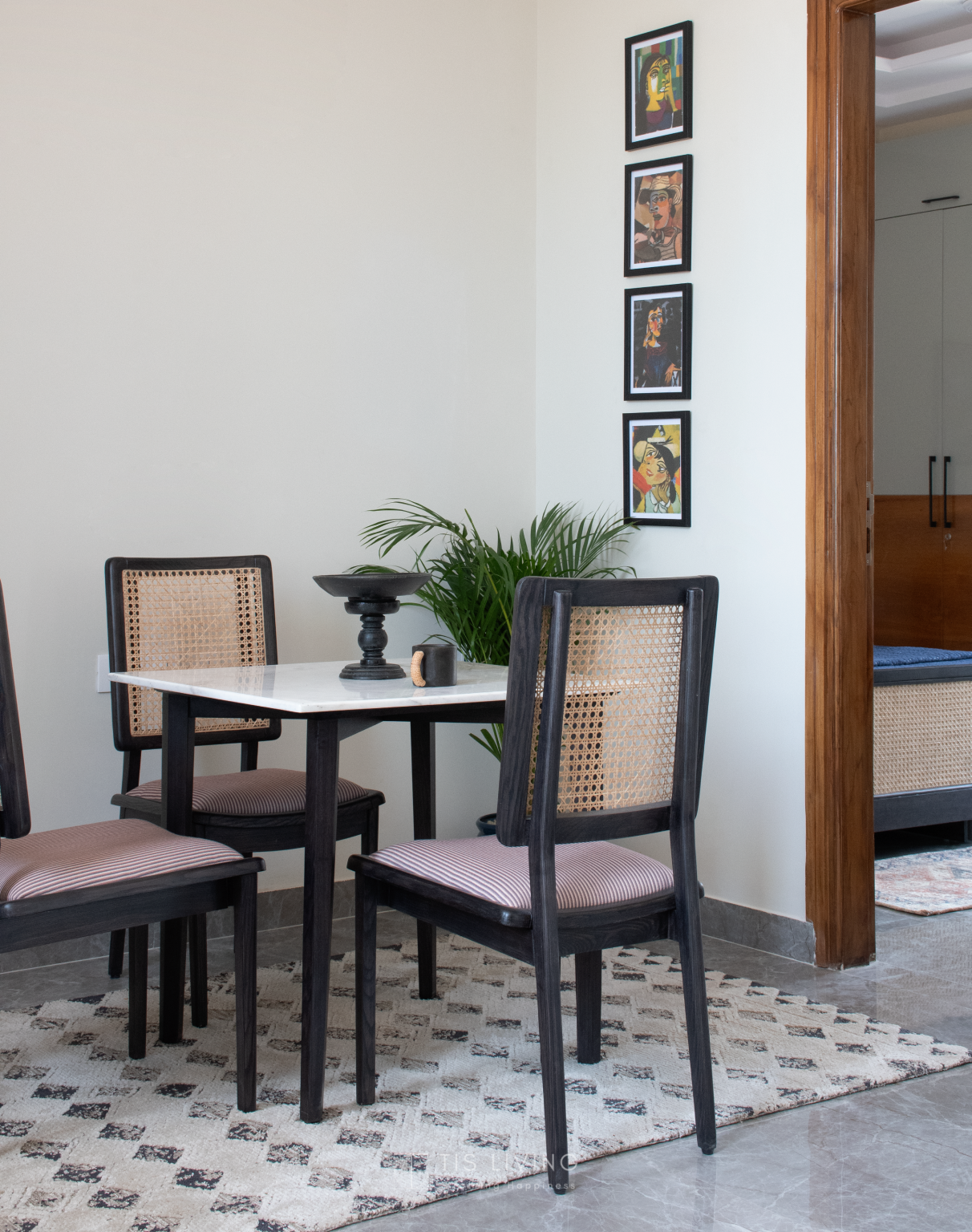
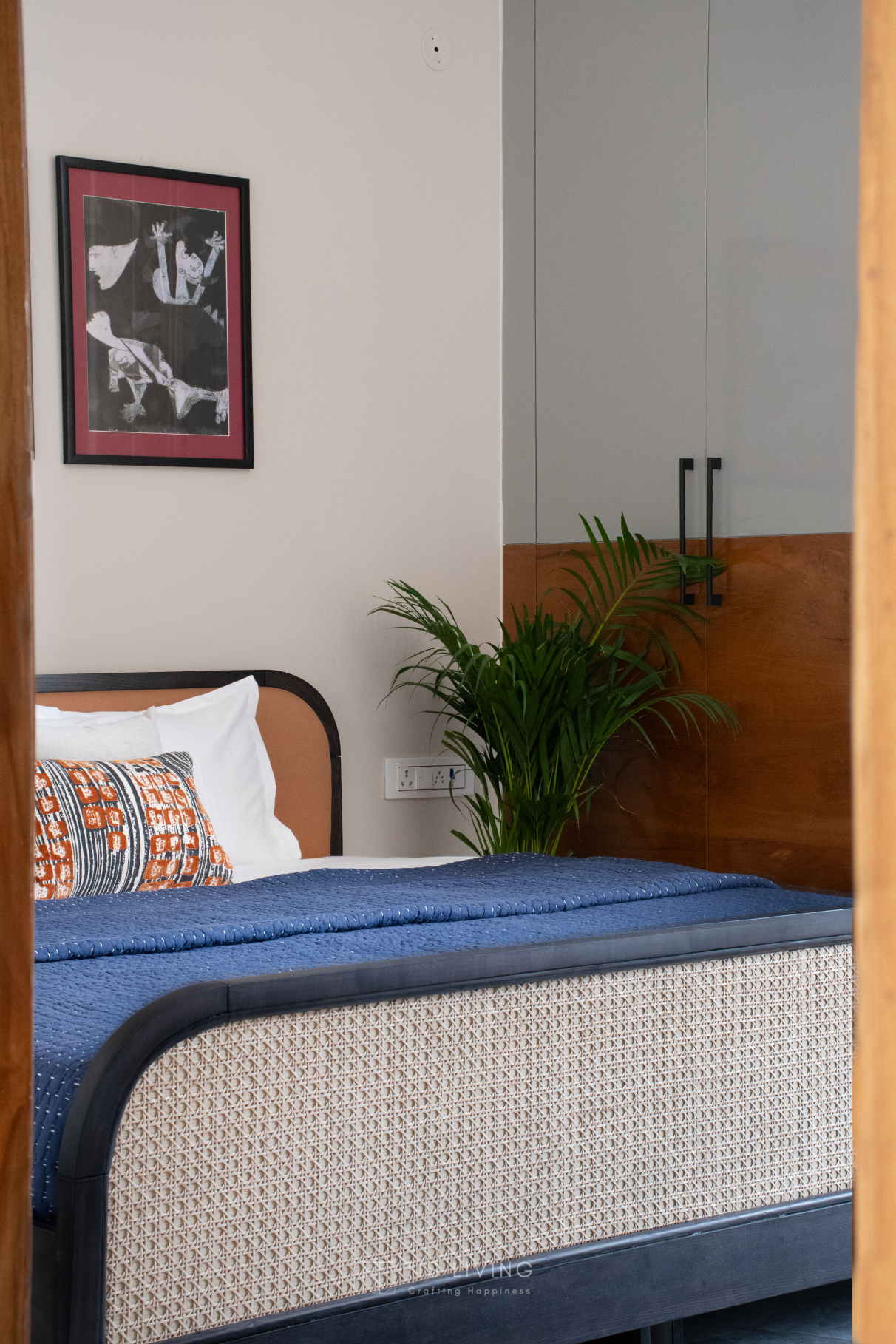
Dining and bedroom views at The Sukoon, Dehradun. Interior design and woodwork by TIS Living.
Two approaches to the woven bedroom
The bedrooms at Airyland Estate
in Mussoorie show how differently a woven detail can be composed. In
one room, tall woven panels behind the bed are echoed in the wardrobe fronts.
Wooden borders give those large surfaces a clear rhythm. In another, the weave
is contained within a dark bed frame with turned posts, against pale pink
walls.
One treatment makes the weave part of the room’s larger
composition; the other uses it as a more focused furniture detail. Both suggest
a useful starting point for a home: decide how much visual space the material
should occupy before selecting a pattern. Airyland was designed by Aditi Sharma
of ASDS, with bespoke loose furniture crafted and executed by TIS Living.


Two bedroom treatments at
Airyland Estate, Mussoorie. Design by Aditi Sharma, ASDS; bespoke loose
furniture by TIS Living.
Desks and wardrobe fronts
At UPWAN – 9B in Siliguri, woven details appear across a
bedroom desk, its chair back and the wardrobe fronts. The desk combines rounded
ends with woven front panels; the nearby wardrobe repeats the texture within
tall wooden borders. The relationship is easy to read because the weave is
carried across pieces with different proportions.
This is a useful approach when you want continuity between
furniture and fitted storage. It also needs careful specification. For a
wardrobe, ask whether the woven insert is open or backed, how it will be
cleaned, and what repair access is available. Do not assume that a
woven-looking shutter provides ventilation or keeps dust out; those qualities
depend on its actual construction.
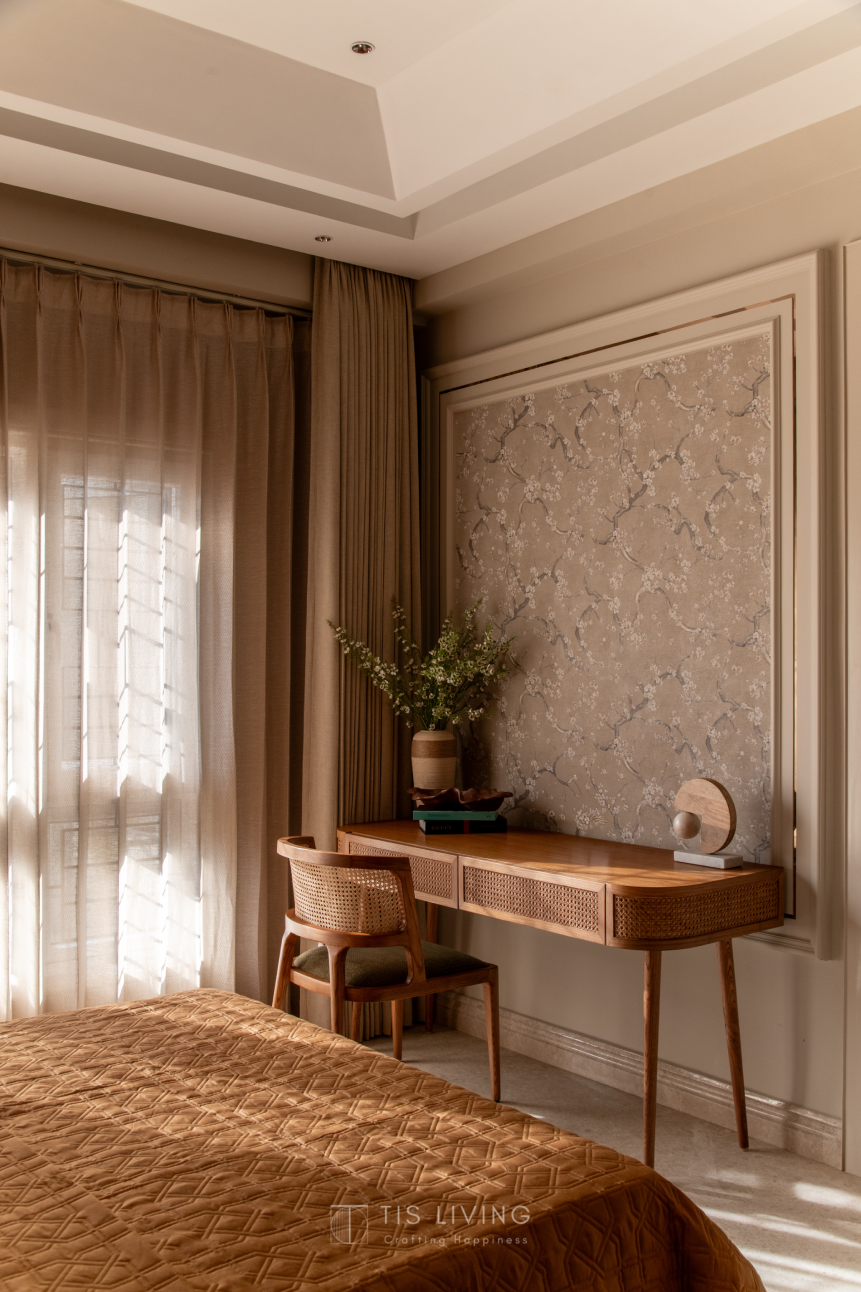
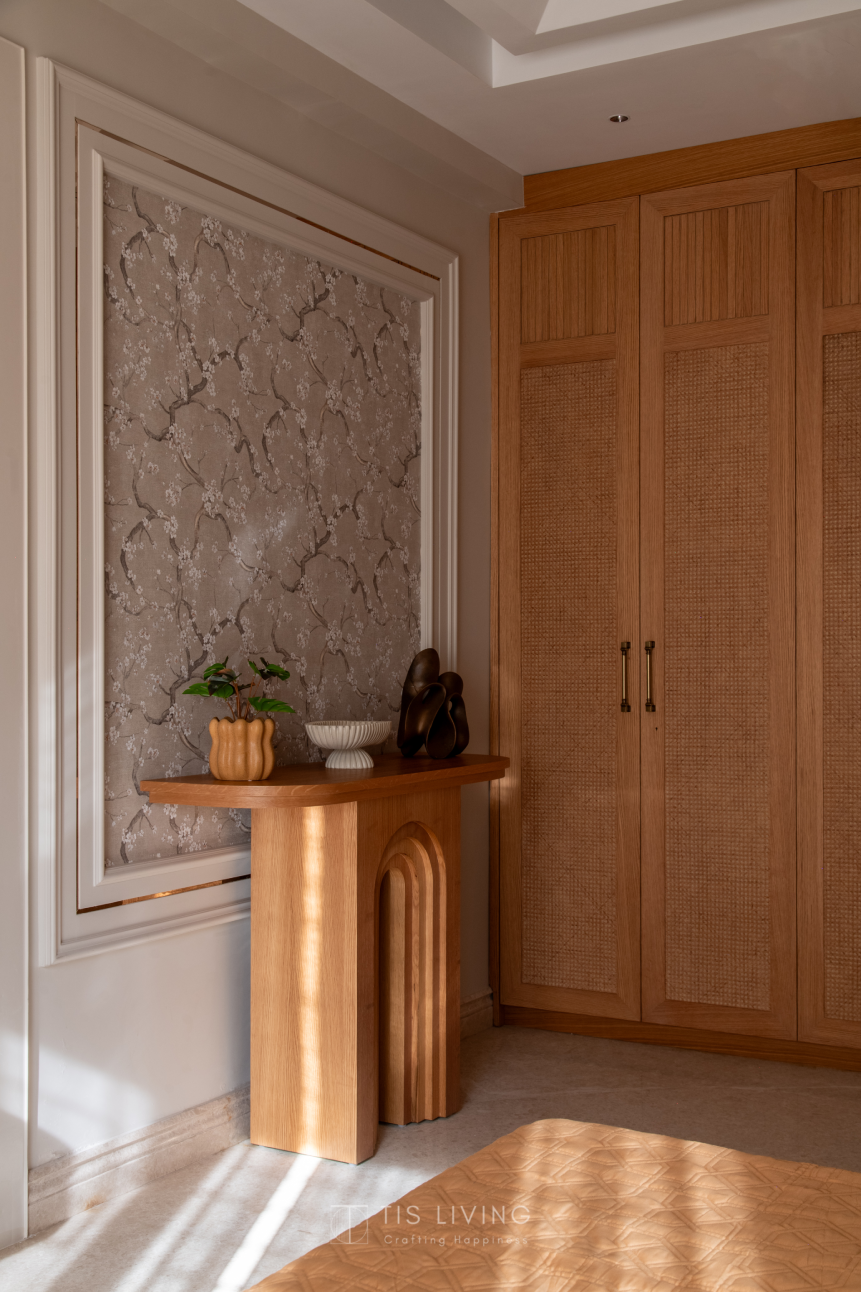
Woven desk fronts, chair back and
wardrobe panels at UPWAN – 9B, Siliguri, from TIS Living’s project photographs.
Choose the location before deciding the finish
Natural cane needs an appropriate environment. An indoor
piece should not be treated as balcony or garden furniture because it has a
relaxed appearance. For any partly exposed location, confirm the intended use
of the complete piece, including its frame, finish, upholstery and fixings.
Consider the room through the year. Is there direct
afternoon sun? A heater nearby? A damp wall or a window exposed to rain?
Manufacturer guidance from Carl Hansen
& Søn advises keeping its rattan away from heat sources and
direct sunlight.
Excessive dryness also matters. Fritz Hansen’s woven-material
care guidance explains that low humidity can make its natural weave
dry and vulnerable to breakage. Persistent dampness creates a different maintenance
concern. Follow the supplier’s guidance for the specified material rather than
assuming that either very dry or very humid conditions are harmless.
For a holiday home left closed between visits, include
ventilation and periodic inspection in the maintenance plan.
How to care for cane furniture
Remove dust gently
Use a soft brush or a vacuum with a suitable brush
attachment to lift dust from the weave and edges. Work gently, without pushing
debris through the panel. Northern’s cane-mesh care
guidance recommends regular dusting with soft tools.
Match cleaning to the finish
Check the maker’s instructions before introducing water or a
cleaning product. Where damp wiping is permitted, use the specified method,
remove excess moisture and allow the piece to dry before use. Avoid saturating
the weave or surrounding upholstery.
There is no single treatment suitable for every cane
product. Manufacturers prescribe different routines for their own
constructions, including different approaches to moisture and conditioning. Do
not transfer an oil, polish or soap recipe from another brand to your furniture
without confirmation.
Protect panels from concentrated pressure
Do not stand or kneel on a woven seat, and keep children
from using decorative panels as footholds. TON’s furniture care
guide specifically warns against standing or kneeling on cane parts.
Ask for help when the weave changes
If strands break or a panel becomes noticeably loose, ask
the maker to assess it. Do not begin a home tightening treatment without
identifying the material and construction. Repair or replacement may be
possible, but it depends on how the panel is fitted and whether the frame
remains sound.
What to discuss before commissioning
Bring a reference image and explain where the furniture will
be used. Discuss the weave, frame finish and upholstery together, rather than
choosing each in isolation.
At TIS Living, these choices sit within our FACE framework:
Functionality, Aesthetics, Care and Ergonomics. The discussion includes who
uses the piece, how it relates to the room, what maintenance is realistic and
whether its proportions suit the person using it.
Ask for the agreed materials and care requirements to be
recorded. A sample helps communicate appearance; clear specifications and
approved drawings establish what will be made.
Common questions
Q. Is cane furniture suitable for everyday use?
It can be, when the complete piece is designed for that use.
Check the frame, panel function, loading guidance and maintenance requirements.
A decorative side panel should not be treated as a seat.
Q. Can natural cane furniture stay outdoors?
Do not assume it can. Use it outdoors only when the supplier
confirms that the complete product is suitable for the intended exposure. A
covered balcony can still receive rain or strong sun.
Should I oil or wet cane regularly?
Only if the manufacturer recommends it for that specific
product. Treatment instructions vary with the material, weave and finish. Start
with the supplied care instructions rather than a universal home remedy.
Q. Can a damaged cane panel be replaced?
Sometimes. Ask the maker about the fitting method and
replacement options before purchase. The answer depends on the piece and the
condition of its frame.
Choose the piece for the way you live
Cane earns its place through the contribution it makes to a
room and the use the furniture supports. Consider the setting and upkeep
alongside its appearance.
Explore the Savoy Cane
Armchair, see cane details in The Sukoon, or discuss a bespoke furniture brief with TIS Living.
Share this story
Share
Written by
TIS Living
Stories, insights and design perspectives from the TIS Living editorial team.
Stay in the loop
More stories like this one
Design guides, material stories and project features — delivered when we have something worth saying.